Gum disease
How do I know I have gum disease?



Bleeding gums
Healthy gums don’t bleed. If your hand started to bleed every time you touched something it would be alarming, well the same is true for your gums.
Bleeding is a sign of inflammation of the gums, and while all bleeding gums do not necessarily progress to gum disease, it is a sign of increased risk. The gums might bleed if you brush them, or it can even be that when you eat they bleed. In more severe cases, they can bleed all by themselves.

Swollen gums
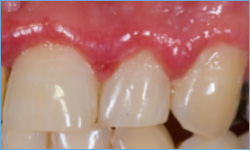
Another sign of inflammation is the gums swelling. The gums can look red and puffy.
Longer teeth
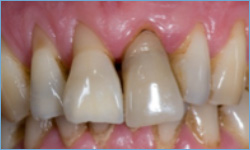
If it looks like the gums have shrunk away from your teeth, this again can happen in gum disease, as it is a sign that there is less bone left around your teeth.
Mobile or loose teeth
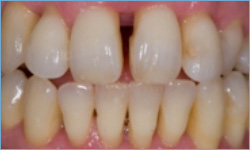
Gaps getting bigger between your teeth
When the bone shrinks away from your teeth, they can spread out, and this often results in gaps between them.
What can increase my risk of gum disease?
Healthy gums don’t bleed. If your hand started to bleed every time you touched something it would be alarming, well the same is true for your gums.
Bleeding is a sign of inflammation of the gums, and while all bleeding gums do not necessarily progress to gum disease, it is a sign of increased risk. The gums might bleed if you brush them, or it can even be that when you eat they bleed. In more severe cases, they can bleed all by themselves.
Family history
Smoking
Systemic disease